
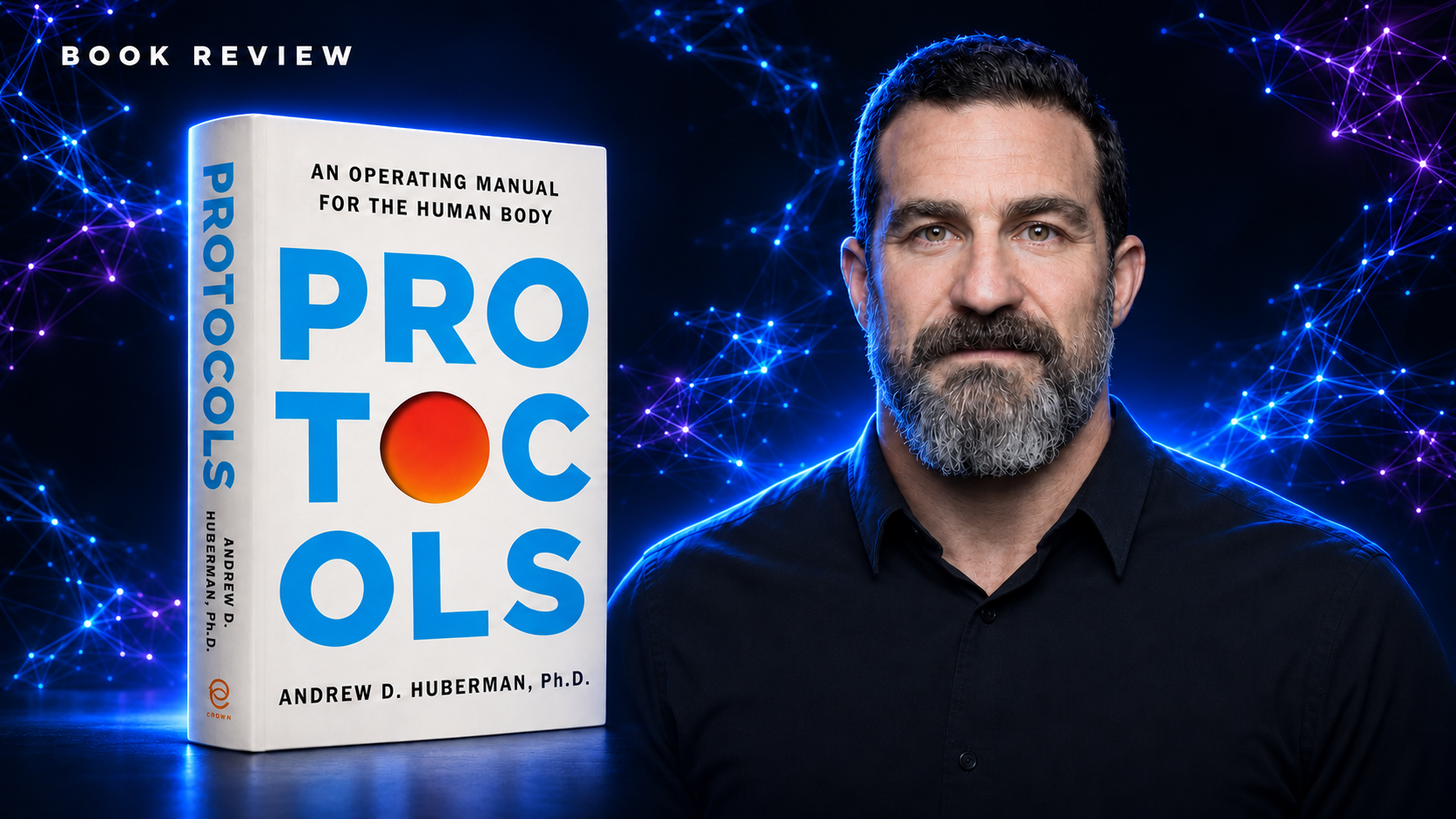
I’ve been a fan of Andrew Huberman for years. Finding two or three hours to watch one of his conversations is another matter, but I find him impressive: he can take a subject as familiar as sleep and leave you understanding it in a different way.
If you haven’t come across him, Huberman is a neuroscientist, Stanford associate professor, and host of the Huberman Lab podcast. His research background includes vision and the brain, which helps explain why light and the visual system feature so prominently in his work. His doctorate is in neuroscience; his Stanford appointments span neurobiology and ophthalmology.
His reach now extends from Jimmy Fallon’s late-night audience to the longer conversations on Steven Bartlett’s The Diary of a CEO. That’s quite a range for someone explaining how the brain and body work.
But I think the appeal is easy to understand. People want answers to problems they feel every day. Why am I tired? Why can’t I sleep? Why is it so difficult to concentrate when I finally have time to work?
From a long conversation to something you can use
Huberman’s work and podcast cover a wide range of science. In Protocols: An Operating Manual for the Human Body, he organizes practical guidance around seven areas: sleep, exercise, stress control, nutrition, light, focus, motivation and learning, and personal growth. The book explains the reasoning behind the practices as well as what to do.
For someone who enjoys his work but struggles to make time for the interviews, that format has obvious appeal. You can return to a subject when it becomes relevant to your life.
The choice of topics also makes sense to me. They meet people where their interest already is: feeling rested, having more energy, managing stress, and being able to think clearly.
Sleep is a good example. Creators have documented their own attempts at Huberman-inspired sleep and daily routines, sharing what they tried, what fitted their lives, and what they disagreed with. Those accounts aren’t clinical evidence, but they show the curiosity his advice generates. People want to know what happens when someone actually tries it.
One way to get more out of any book is to give yourself a question before you get too far into it. Read the table of contents and introduction, then ask: what do I want to understand or do differently by the time I finish?
For Protocols, my question is simple: which daily habits offer the greatest benefit for the time and effort they take?
There’s plenty to choose from. The challenge is deciding where to start.